Showing posts with label TV and Radio. Show all posts

Friday, January 29, 2010

Sympathy for Bob Gutkowski

or, Why Business Is Hard

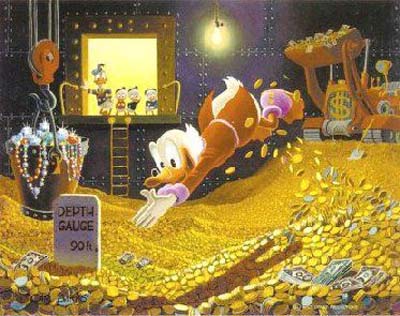
As you may have read, a judge dismissed former Madison Square Garden exec Bob Gutkowski's suit alleging that the Yankees owed him money for his alleged role as "the architect of the YES Network." The YES Network, and the local media revenue it brings in, being the economic engine that drives the Yankees' financial empire, you'd think that whoever...architected? that engine would be swimming in giant vats of money, Scrooge McDuck-style. But Gutkowski wound up getting none of that filthy lucre--he just got a handful of consulting contracts from the new network, and, he says, a lot of promises that he'd get to build and/or run the network someday. And he got to do neither of those things. For this he sued, and now lost.

Because the law suit was dismissed, rather than going to trial, we have no basis to determine if Gutkowski's claims are true, or if they're more along the lines of those annoying "Windows 7 was my idea" commercials:


(By the way, this parody of those commercials was pretty funny, and only slightly NSFW.)


Anyway, after the YES Network case was dismissed, Gutkowski's attorney's comment to the New York Times was, “What’s interesting about the opinion is that the claims were dismissed on several legal technicalities, not because Steinbrenner didn’t take Gutkowski’s work product and make millions of dollars off it.” Most of those "legal technicalities" amounted to the fact that Gutkowski and Steinbrenner never had a contract, which is quite a troubling technicality when you're suing for breach of contract. The other technicality was that, even though Gutkowski allegedly first pitched the concept of a Yankees network in 1996, and the YES Network came online in 2002, Gutkowski waited until 2009 to sue, so his suit was late.

But beyond the legalities, should we feel bad for Bob Gutkowski? If what he claims is true, George Steinbrenner, a very, very, rich man, got much richer off his ideas and work, and didn't pay him what he was due. The fact that he's much less wealthy than Steinbrenner immediately makes him an object of sympathy, since the relationship was unequal. On the other hand, his claims also sound a bit like the outrage of a girl who's shocked--shocked!--that her date is trying to get to second base during the limo ride after the prom.

(Not a reference to personal events, by the way. It didn't help that my prom date had a boyfriend, and that a food allergy rendered me mute for most of the evening. Long story.)

This is how business works. Coming up with good ideas is not the hard part. This week's announcement of the iPad has experts coming out of the woodwork, all claiming that they could do Steve Jobs's job better than he did, by giving the device a better name, different features, whatever. The big difference, to them, is that Steve Jobs has Apple's considerable resources at his disposal, while they don't. How unlucky for Apple that that hack Jobs is still at the wheel!

Seriously, the hard part isn't getting the brilliant ideas, it's getting paid for them. People with brilliant ideas usually have to hook up with people with resources to make their idea a reality. From the point of view of the person with resources--if you've ever owned or created anything of value, you've probably experienced this--the world is full of people with bright ideas who want to share their ideas with you. Usually, their pitch amounts to some variation of "give me part/half/all of your money/assets/intellectual property, and with my knowhow and contacts, I'll make us a fortune!" These offers come with a differing levels of legitimacy--ranging from emails from a Nigerian prince to a phone call from Bill Gates's garage, circa 1976--and as the party risking more than their time and effort, the person with resources has to be very careful who they listen to. The flipside is also true. People with resources will often string people with ideas along with a lot of handshakes and "that sounds promising"s and vague promises, and if the idea people haven't taken steps to protect themselves, they'll find someone else executing (and, if it's good, profiting from) their idea.

That last scenario is what Bob Gutkowski's claims look like: he had a bright idea, an idea which, to work, required a resource he didn't have and couldn't buy (the Yankees). So he went to the Yankees' owner with his bright idea for a Yankees network, and in return he got a bucket of false promises and betrayals. Simple, right?

The part that makes it complicated is what, according to Gutkowski's complaint, happened in 1998. At that point, he formed a company to help the Yankees create their network, and they gave a presentation in which they laid out their whole strategy. They presented the Yankees with a contract, saying that to get started with their plan, it would take $25,000 a month, for a minimum of six months. The story Gutkowski tells is that Steinbrenner didn't sign, but directed them to go ahead with the plan anyway. He then paid only one month's worth of the contract, and nothing else.

So obviously, they took him to court over the $125,000 the Yankees owed, right? Apparently, no. Instead, Gutkowski signed a short-term consulting agreement with the Yankees, based, he says, on smooth talking and promises from the Boss himself. OK, so that sounds reasonable, kinda, but still: 125 grand!

Maybe that just wasn't enough money to go to war over, but surely things must've changed in 2002. That's when the Yankees started the YES Network, without Gutkowski's participation. According to him, they stole his idea! But did he sue? No, he signed another short-term consulting contract, and then another one in 2004. Why would someone hire on to work for a guy who stole his ideas, not once but multiple times? Again, the answer offered is that the Boss and his lackeys persuaded Gutkowski with false promises that never actually included concrete discussion of salary figures or percentages of ownership in the YES Network Gutkowski would get. In the complaint, it sounds like George Steinbrenner is the most persuasive person ever born, with near-magical powers of mesmerism to make Gutkowski keep playing Charlie Brown to his Lucy van Pelt.

(A quasi-theological corollary to this: if the Boss had magical persuasion powers, why wouldn't he have used them to talk the Red Sox out of winning the 2004 ALCS?)

Back to Gutkowski, given his admitted actions, it just doesn't make sense that he really thought that anyone had anything other than a moral obligation to do right by him. And sadly, in the worlds of business and law, moral obligations ain't worth much, probably much less than he netted from the consulting contracts he kept signing.

(Huge hat tip to Ben Kabak, whose post over at River Avenue Blues inspired this rant.)

Thursday, March 06, 2008

Good News, Links, and Tonight's Meetup

It's already been an eventful spring down in Tampa , with all eyes watching the Yanks' pitching young 'uns like hawks. Protective mother hawks. But the best news of the spring has been the negative biopsy Bobby Murcer received this week, showing that what some thought could have been a recurrence of his brain cancer was actually scar tissue. Surviving cancer is a day-by-day thing, but I'm glad to hear that we'll have the chance to enjoy some more days with Bobby. You can't ask for much better than that.

Anyway, I'll be at the Barnes and Noble on Fifth Avenue tonight at 6:00 (150 Fifth Avenue, & 18th Street). Being on a panel with Joe Sheehan, Steve Goldman and Jay Jaffe means being guaranteed that no one will ask you a question, but I'll fight to get my cuts in anyway. The tour will also take us (minus Goldman) to Long Island on Saturday, with an appearance at the Border's Book Store in Westbury, located at 1260 Old Country Road. That'll be at 2:00 PM. Next week (the 15th), I'll be in Rockaway, New Jersey with Steve, I'll update you on the time and place later on.

A few quick hits:

The rap on Representative Anthony Weiner, like his political mentor, Chuck Shumer, is that it's very dangerous to get between him and a TV camera, ever. He's also one of the more partisan politicos you'll find, which is one reason I hope his plea to the Attorney General, not to waste further federal resources on Roger Clemens finds a sympathetic audience. I'm on the record saying that Congress had no justification trying to sort Clemens's and Brian McNamee's dirty laundry in the first place; the investigation requested by the Oversight Committee is pouring more money after the initial bad investment of time and funds.

For BP subscribers, a couple of fresh Yankees links: Will Carroll's Team Health Report, and Kevin Goldstein's Organizational Rankings, which lists the Pinstripers as the #6 organization in the game.

I also had a quick take on Moneyball and the retirement of Jeremy Brown for Prospectus Toolbox earlier this week. Here's a taste:

The news that Jeremy Brown was hanging up his spikes due to "personal issues" made more of a stir last week than you'd expect from the retirement of a 28-year-old catcher who's spent the last two years in Triple-A. Our prospects expert, Kevin Goldstein, gave Brown an extremely evenhanded send-off over on Unfiltered; others have been less charitable, invoking imaginary choruses of scouts cheering the end of Brown's career. At least, I hope the cheering is imaginary: it'd take a Grinch-sized heart to rejoice in the end of someone's big-league dreams, unless their name is, say, Ben Christensen. The reason that Brown is the focus of such attention and schadenfreude is because the A's drafted him in the first round of the 2002 draft—an overdraft which, by itself, wouldn't be that noteworthy—and because Michael Lewis wrote a best-selling book which hailed Brown's selection as the bellwether of a new way of doing business, which the author dubbed "Moneyball" in the book of the same name. Apparently, those celebrating Brown's retirement are marking the occasion as the death of Moneyball acumen—a festive wake, with dancing and ironic toasts.

Now, Brown never asked to be the Luke Skywalker of a sabermetric revolution. He was a guy who was already going to face a fair amount of hazing in the minors because his body was not quite one that Calvin Klein would put on a billboard. After Moneyball was published, not only was he much more famous than the average 35th overall pick, the negative aspects of his physique were cataloged in the book for ease of heckling. Saddling him with the additional burden of representing the A's organizational philosophy—as interpreted by Lewis—was never particularly fair. However, five years removed from the book's initial release, it is a reasonable time to look back at the 2002 draft, and at the A's organization in general, and ask: is Moneyball really dead?

Monday, January 28, 2008

Movie Review: Cloverfield

If you can get over the issue of the way the story is told, you'll likely enjoy Cloverfield. Cloverfield belongs to a genre, along with Blair Witch Project, of movies told in the first person, as video footage of "real" events captured by someone who just happened to have a camera at the ready. Typically, movies of this genre present two particular obstacles to the suspension of disbelief. First, the shaky camera movements can take you out of the cinematic experience by making it too hard--and sometimes too nauseating--to follow the action. Second, you have to believe that a person would be so dedicated to documenting their experience that they would keep the camera rolling, even in situations where they're in grave personal danger and it would make more sense to turn the thing off and just concentrate on running away.

If you can get over those two things--and for the most part I did--then there's nothing to keep you from enjoying an exciting disaster/horror flick, that, after a very slow beginning, is relentless and well-paced. Sure, there are other problems, but I tend to look at them more as features than flaws: the characters are fairly unsympathetic, and they make poor decisions, but you pretty much don't have any horror flicks these days without those elements being in place. In this case, the unsympathetic characters are yuppies who live in Tribeca, who've gathered together for a going-away party for their friend Rob, who's taken a Vice-President job with a company in Japan. If you've ever heard of the term "viral marketing," it's likely you already know that Rob's party will be disrupted by the arrival of something terrible enough to send the Statue of Liberty's head rolling down the street like a bowling ball, and that the rest of the evening will track a handful of the partygoers' struggle to survive the catastrophe.

The result is a lot like Titanic, with all the extraneous junk scraped away--the unbelievable love story, the awkward "eighty years later" framing device, the various clinical dissections of what went wrong and how--and everything is just pared down to people reacting to the danger of near-certain death, just of a more fantastic nature. The camcorder's-eye-view of Cloverfield traps you in the perspective of these characters, who have extremely limited information about what peril they're facing or what they should do about it. The story never cuts away to a briefing at the White House (a typical scene in this kind of film) to get a dose of exposition about the situation...and distance from our imperiled main characters.

Because of the lack of exposition, there really isn't much of a message to Cloverfield. Although the film appropriates some of the imagery of the September 11 attacks, it's not about our fear of terrorism; nor is it about Iraq (like last year's horrible 28 Weeks Later), ecology (The Host, The Day After Tomorrow, and the original Godzilla films), hubris (Towering Inferno, and many other similar disaster movies), racism (the original Night of the Living Dead), class warfare (Titanic), or man's inhumanity to man (28 Days Later, among many others). In Cloverfield's case, a monster is just a monster--and that's one of the things about it that worked for me. Recommended.

****

As an additional review, I'll fess up that I've been watching the clunkily-named weekly series, Terminator: The Sarah Connor Chronicles on FOX. The idea of the show is that, after the events of Terminator 2: Judgment Day, the eponymous Ms. Connor and her savior-of-the-human-race teenage son, John, continue to have adventures while battling to keep the artificial intelligence known as Skynet from ever existing--even though at the end of T2 it was believed that Skynet had been retroactively destroyed, thereby creating a hopeless paradox (how can robots come from the future to kill you/save you if you've eliminated the system that created the robots?). The series pretends that the second Terminator sequel (2003's T3: Rise of the Machines)--(SPOILER ALERT)in which the paradox is essentially undone, and the robotic apocalypse occurs as scheduled (/spoiler)--never happened.

Maybe it's because I've spent the past few weeks acquainting myself on DVD with a show with similar man-against-robot issues, the SciFi version of Battlestar Galactica, but I'm unimpressed. Chronicles, for all the cachet of its heavy-duty license and expansive special effects budget, isn't terribly deep, so far. In its mythology, time travel is much more common than in the films--and while that discovery opens up possibilities, it also weakens the premise to the point of flimsiness. The cool thing about the earlier Terminator films was that the protagonists were left on their own, without hope of backup or relief. This development throws those elements out the window, and opens up the way for all sorts of Deus Ex Machina b.s.

For the second time in a TV season, a network has turned over its most-hyped property to a relatively obscure British actress. When NBC did it for the Bionic Woman, it was a fiasco--Michelle Ryan, an actress who sounds smart and confident using her own accent, was whiny and unfocused as a Californian twentysomething-turned superhero. Chronicles' leading Brit is Lena Headey, and although her accent is better than Ryan's, she's still not entirely right for the role she's playing. Linda Hamilton reimagined the role of Sarah Connor in Terminator 2, turning the disco-era waitress she played in the first film into a grim-faced warrior woman. She was buff, ruthless, and more than a little crazy. You were scared of this woman--she had no compunction about harming people if they endangered her son or simply got in her way.

Headey, on the other hand, isn't scaring anyone. Her Sarah Connor is a fairly generic action heroine. She looks athletic and is credible in the show's action scenes, but she isn't the physically imposing presence that Hamilton was in T2. Headey's take on the character talks like someone ruthless, but she's also emotionally fragile and conflicted--qualities that might make her character more sympathetic than Hamilton's Connor was, but they also make her less interesting. Summer Glau is more intriguing as the latest friendly Terminator model: the girl's become a science fiction fan favorite by being pretty and having a strange affect, and both of those qualities are still in evidence here. There's some promise in the relationship between Glau's Terminatrix and Thomas Dekker's savior-cum-teenage-whiner, John Connor; but the first three episodes haven't really placed the focus there.

If it weren't for the writer's strike, it's likely that I'd dismiss Chronicles off-hand as something that isn't, for the moment, worth the space it would occupy on my DVR. Right now, however, it doesn't have much competition in the scripted drama category, so I'll keep watching it until I lose interest or it gets superseded by better shows. Mildest possible recommendation, for now.

Sunday, November 18, 2007

A Few More Headlines

A few other random stories and thoughts:

This better be good: I stumbled on TBS the other day (Jerry Maguire was on. You got a problem with that?) and I see more of those Frank TV commercials. And the commercial says it premieres on Tuesday.

Tuesday?

You mean Frank Caliendo's show hasn't aired yet? How is that possible? They carpet-bombed us during the playoffs just to wait, what, another month before releasing it?

How many 15- and 30-second spots have they aired for this show over the past six weeks? It's a half-hour show, so that's maybe 22 minutes of actual Frank TV per week. So the question is, when all is said and done, will we see more minutes of Frank TV than we've seen commercials?

The ballsiness of all this could be enough to back off my Frank TV ban. But at this point, there's so much hype behind this that the show better do more than just make people laugh. It better cure the common cold or something.

Yanks Sign Jose Molina to a 2-Year Deal: Not sure that there's anything else to say here. The Yanks have dumpster-dived for catching backups since the tandem behind the plate was Posada/Girardi. Molina's the best guy available--it's virtually guaranteed that any of the available players that are better than him (Lo Duca, Barrett, Yorvit Torrealba) are going to get starting jobs elsewhere--so a commitment was in order.

Gold Gloves Awarded, the Golden Child's Reign Ends: Derek Jeter's three-year reign as the AL's Gold Glove at shortstop ended. Orlando Cabrera got that spot, and it's not a horrible pick, although he's been such a whiner over the past few years--whining about Yankee fans, whining about the Mariners, whining about how no one gives him respect--that it's hard to feel happy for him. Based on the stats, he's a more worthy contender for best defensive shortstop than Jeter, but he probably wasn't as good as Tony Peña, Jr. in 2007.

Derek Jeter Accused of Not Paying Taxes: ...by the State of New York. They're fighting Jeter's claim that he was a resident of Florida in 2001-2003, claiming that because he owns an apartment in Manhattan, and because the tabs were full of stories about hooking up with starlets in New York City's trendiest night spots. Of course, I oversimplify. Regardless, overall, it's not been a good off-season for the Captain.

Tuesday, October 16, 2007

The Best Story in Baseball

Now that Scott Raab and I are done (apparently, for the moment) trying to determine which one of us is the bigger douchebag. Let's talk about the National League, where the Rockies, making sure that TBS doesn't come anywhere close to making their money back on their big baseball contract, just completed its second sweep this month. Between both Division Series and the NLCS, TBS got one game over the minimum.

There are always nits to pick with TV coverage, but TBS brought two things to the table this off-season that I'll cherish. The first is the lack of stupid sound effects, particularly whenever a run scores. I did a double-take the first time a run scored in the NLDS and there was no stupid digital sound effect. And then there was the TBS Hot Corner, a simulcast (delayed about a minute off live) of the game, presented online with studio commentators. There were two teams, one out of TBS's studios in Atlanta (sadly, despite the presence of a pair of lovely young ladies on that panel, it had all the energy of the 3:00-4:00 AM shift at a telethon) and another out of New York, featuring the guys from MLB.com Vinny Micucci and John Marzano, along with, as special guests, a couple of my homeboys, Will Carroll and Joe Sheehan.

The MLB crew was really an alternate view of what baseball coverage could be--minimal narration of the game action, a freewheeling discussion that was simultaneously smart and casual. It was a bit like a baseball version of Mystery Science Theater 3000. It took a while to get used to, mainly because you're abandoning a large television to watch a small MLB.tv screen, split in four views--one a fixed camera view of the pitcher and catcher, another the studio, a third showing the pitch tracker, and a fourth aimed at one of the dugouts. It's hard to go from HD to the little screen. And because of that Atlanta crew.

Still, in a day and age where where I find myself muting the TV more often than listening to the on-air voices chatter...it's nice to have alternatives. One thing that this has reminded me is that, for all the technological changes we've seen in baseball broadcasts--HD, super slow-mo, pitch tracking--the human part of the broadcast has remained more or less the same, not all that much different from the way the game was (and still is) presented on radio. One guy describes the action, another tells stories and gives insights during lulls in the action. There's merit to the method, but it couldn't possibly be the only way to do a sports broadcast. And now we know it isn't. I wish we were getting more Hot Corner, but TBS is exiting the stage, and FOX hasn't picked up the concept.

***

As for the game itself, there was a moment that reminded exactly why the Rockies' NLCS victory was so exciting. The Rockies had just taken a 6-1 lead in the fourth, and the feeling was completely that the game had been broken open.

When exactly did we start considering a five-run lead at Coors Field a safe? Just now, within the last month or so. For the past ten years, even when the team was relatively successful, that five-run lead was as nail-bitingly tense as a two-run lead in most other parks. Some of the change is probably the humidor--but the improvement of this team is amazing.

Over in the AL, being a Red Sox fan for a series still isn't quite working out for me. I like Matsuzaka, but he doesn't look like the same pitcher he was at mid-season, and you have to wonder if he's totally gassed. Jake Westbrook, meanwhile, chewed the Sox up, letting them beat balls into the ground for the great infield crew behind him to gobble up. Cleveland's up 2-1 now, which puts a big weight on Tim Wakefield's shoulders.

Sunday, September 09, 2007

Movie Review: The Bourne Ultimatum

The thing about Matt Damon's Jason Bourne--the main thing, what sets him apart from other action movie heroes--is that he knows the unbelievable stuff he's going to do will hurt. As he leaps through windows and out moving vehicles, and intentionally crashes cars he's driving to escape or disable pursuers, there is almost always a moment where you see Bourne steeling himself, preparing for the pain, bracing for impact.

Human beings don't just experience pain, we fear it. Many of us avoid going to the dentist, we talk our way out of physical confrontations, we delay breaking up with people who are obviously wrong for us, all because we don't want to experience pain. In the movies, those principles are forgotten--behaving as our normal cowardly selves isn't terribly cinematic, so the human pain avoidance mechanism is overridden. Not only do people in movies willingly or even willfully put themselves in harm's way, they often seem to shrug off pain as if they were loaded to the gills with Vicodin. Even if they do get hurt--usually for plot-specific, drama-enhancing purposes--they don't seem to worry too much about it, before or after.

There was a notable exception to this in the first Die Hard movie. There's a moment in that film where the protagonist, John McClane, is in a firefight with his enemies, and he has to retreat. The problem is that he's barefoot, and the floor all around him is covered in broken glass. You get a second where it registers on Bruce Willis's face that this is his situation, and you wordlessly get the normal, human reaction, "Run across broken glass? Screw that!" before he's forced to go through the rest of the movie with shards of glass embedded in his feet.

Throughout all three of the Bourne movies, that type of moment happens repeatedly, and it helps remind us that Damon's car-chasing, ass-kicking superspy is human. That, in turn, adds some needed spice to the series' many action set pieces, which in this installment includes chases by car, motorbike, and on foot, in train stations, on roof tops, and on the streets of cities in four continents. The chases themselves are exhilarating and well-shot, but the main thing is that the audience feels affinity for the ultracapable but always outnumbered Bourne. If you don't empathize with Bourne's pained expression as he executes yet another agonizing-but-necessary stunt, you probably won't enjoy the movie.

I mean, it's not like the writing is all that good. As far as plot goes, it's amazing how little things moved along over the entire three-film series--given how many dance steps are repeated from the second film, you almost have to wonder why that film, the Bourne Supremacy, was even necessary. You get repetitions of some chestnut-standard scenes--chase through the rail station, cops summoned to European CIA safehouse, the "I'm talking to you on the phone while observing you from afar scene" which is always followed by some CIA bigwig saying "Oh my God, he's in [insert name of city here]! Seal off a ten-block radius!"

Oh, and while we're on this thing with the ten-block radii, you've also got some seriously hackneyed dialog. Three movies into the series, enough people are still saying "You really don't remember, do you?" to Bourne that my brother-in-law was mocking it during dinner afterward. And then there's the CIA bigwigs yelling out things like "I want his bank accounts, credit cards, phone records...I want to know what he's thinking before he thinks it."

Um, good luck with that. Somewhere along the line Hollywood got the idea that running covert operations for the CIA was a bit like directing live television. For all our sakes, I hope that this is just them being imaginative.

Now that I've spent some time panning the writing, let's get back to what Bourne Ultimatum did right. Julia Stiles, who was a bit of tacked-on window dressing in the first two movies, finally gets something to do in the third film. As pointed out by the guys at Filmspotting, there are some great echoes of previous installments in the series, which add a bit of depth. The film also features an undercurrent of commentary on the moral responsibility of Americans who volunteer to serve their government uncritically, then get pointed at all the wrong targets in the name of "saving American lives."

That aside, we don't see the Bourne movies for plot or subtext or even for Stiles. We watch for the actions scenes, and the set pieces in this film, hold up remarkably well. There's one of Bourne leading a civilian through an obstacle course of surveillance that is truly masterful, and there's a wonderfully detailed rooftop chase that's very impressive. Actually, the only action scene in the movie that was disappointing was the much-vaunted final car chase through Manhattan. While there have been a lot of complaints about the use of "shakycam" in this film--the perpetually in-motion handheld camera that shakes as its operators follow the action--I wasn't bothered by it. I've criticized the use of shakycam before, but here I thought it was used effectively to emphasize the frenzy of some of the scenes. Then again, I was forewarned about the cameras shakiness and made sure to get me and mine seats at the back of the theater, so I'm sure that others' mileage will vary.

I saw this one with La Chiquita and her family, and the reaction was mixed. Surprisingly, the big endorsement came from my wife, who wants me to refer to her from now on simply as "the Asset." When you can get my foreign-and-independent film-loving honey to buy into your big summer blockbuster that way, I'm happy to say that it's recommended.

****

A quick update on my summer TV shows:

Mad Men gets more and more impressive. The fifth episode featured one of the most suspenseful moments I've seen on TV since the Sopranos. Since we've been talking about the Asset's reaction to things, she's totally creeped out by this show, and doesn't even want to be in the room when I watch it.

The Bronx is Burning's run ended, presenting absolutely no argument as to why it shouldn't have been half as long, and focused only on baseball. With the "this was 1977!" subplots out the window, the last three episodes were hopelessly thin, often giving John Turturro little to do other than static reaction shots to archival footage of games from the '77 playoffs. The final scene, however, was poignant.

Part of the fun of mentioning the Bronx is Burning Comes from the inevitable appearance by Daniel Sunjata's cyber-stalker in the comments section. I have no idea who the DSCS is, or if there is any veracity to her/their myriad claims. Obviously, I do not endorse them in any way. But it looks like Daniel should definitely keep better control of his baby-mamas.

I gave Saving Grace a second chance, and, surprisingly, it didn't suck. While the mix of religion and entertainment is uncomfortable, specially in a show where the characters use strong PG-13 language, recent episodes were less heavy-handed and included more of a role for Laura San Giacomo (another pint-sized actress I had a crush on in the late 80s and early 90s).

My Boys has remained maddeningly inconsistent. Every time it looks like the series will hit its stride, you get a huge misfire--like the too-obvious spoof of Sex and the City a couple of weeks back. Why spoof a show that was canceled a few years back, and therefore isn't topical? Because TBS has paired My Boys with Sex and the City reruns on their schedule. Those who live in glass houses shouldn't cast stones, and My Boys criticizing Sex and the City as unrealistic, shallow, and provincial goes way past irony.

Friday, September 07, 2007

Joba's Dad

Sweet win for the Yanks tonight, made all the sweeter because Harlan Chamberlain was in attendance at Kaufman Stadium. Not the start that we were looking for from Ian Kennedy--he allowed seven hits and three walks--all the walks coming in the first inning--in five innings. But he pitched out of trouble, allowing only two runs against the Kansas City offense. That meant he left the game tied, after the team's MVPs, Alex Rodriguez and Jorge Posada, went yard against Gil Meche in the top of the second.

After Blockhead Kyle pitched an effective sixth, the Yanks pushed across a run in the seventh on a Bobby Abreu double, and then it was Joba time. Just before Joba's first pitch in the bottom of the seventh, came perhaps my favorite moment of this entire season, as Joba's dad, Harlan, started crying when he finally saw his son take a major league mound, for the first time in person. I'm not ashamed to say that it got dusty in my apartment, seeing how moved the elder Mr. Chamberlain was. Later on, the YES crew caught Harlan's reaction as Johnny Damon made a running catch in left-center for the third out of the seventh inning, which was itself priceless.

It's easy for fans to slag baseball's broadcasts, since for the most part we only notice the things they get wrong--the idiot half-baked opinion of a color commentator, the missed first pitch coming out of commercial. I think the YES production crew deserves a lot of credit for keeping our attention on the section Chamberlain rooters (about 120 Nebraskans who came down with the Chamberlains to Missouri to see Joba pitch) and then getting us those wonderful shots of Harlan Chamberlain as his son warmed up and pitched his two innings. They did a great job, as did Ken Singleton and John Flaherty in the booth. Good work all around.

****


Things to watch for tomorrow: Derek Jeter got hit in the hand in the eighth, which brings up the question of reprisals during tomorrow's game, and whether or not Jeter, who's been chronically beat up this season, will be able to make the start. We could see Wilson Betemit get some playing time against the Royals best pitcher, Brian Bannister, tomorrow.

The Yankees won coin tosses for any ties for the Wild Card at the end of the season. So should Detroit or Seattle get even with the Bombers for the last AL playoff spot, that game would be played at the Stadium. Speaking of the Tigers and Mariners, the two teams played tonight, with Detroit coming out on top. The Mariners remain in the meltdown state that saw them drop nine in a row coming into the series they just lost against the Yankees.

Probably the most distasteful thing I've seen today has been people listing the Rick Ankiel story--that back in 2004 (when he was still a pitcher, IIRC) Ankiel took HGH--as being on the same level as Tony Larussa's DUI incident, and and the drunk-driving death of Cardinals pitcher Josh Hancock. Ankiel only endangered himself, and that allegedly three years ago. Larussa and Hancock endangered everybody else on the road, and Hancock tragically lost his life. In a statement to the press, St. Louis GM Walt Jocketty called the Ankiel story "very tragic" (if it's true) which given the other things that have happened to his team this year, is a good indication that he does not know what that word, tragic, means.

Friday, August 10, 2007

What I'm Watching

Sorry for the lack of posting this week, as my writing energy has been consumed by work at Baseball Prospectus--including my weekly column, a chat session, a quick comment on Barry Bonds breaking Hank Aaron's record--and my day job. I was feeling tapped on baseball writing right now so you get a non-baseball post, on the TV shows I've been watching this summer whenever I'm not watching baseball. Enjoy, and if you have any favorites you think I should check out, hit the comments section.

Mad Men -- The best way to describe Mad Men is to say that it's a lot like Deadwood, just set in New York City in 1960. The story follows the lives of employees of a Madison Avenue advertising agency at the end of the Eisenhower administration as they dress impeccably, fool around with anything that moves, and generally live lives of quiet desperation. Like Deadwood, you get the feeling of being shown the seamier side of an era that's somewhat romanticized in American history. What's more impressive is that even though it's on AMC, and features just about nothing in the way of violence, nudity, or even profanity, Mad Men feels just as adult as one of the big HBO or Showtime series.

The only thing I really dislike about this show is the commercial breaks. They have a gimmick where they present advertising factoids, then follow them up with advertisements by the companies featured in the factoid (so a note about the name of Tylenol's first product is followed by a regular, present-day Tylenol ad). It's enough of a pain to sit through commercials, I don't need someone rubbing my nose in the artificiality of TV advertising while doing it. Very highly recommended.

Burn Notice -- A few years back, Jeffrey Donovan had a starring role in a basic cable series called "Touching Evil," which I thought was brilliant, but was quickly canceled. After landing guest appearances in about a half-dozen TV series since the cancellation, he's finally gotten another shot as a leading man. In Burn Notice, Donovan plays a covert operative for the U.S. government, who finds--as they used to say on Mission:Impossible--that the Secretary has disavowed all knowledge of his actions. After getting brushed off by the government, he's stuck in Miami, where he gets bit work as a bargain-basement Equalizer while trying to figure out how he can get his job as a spook back.

"Bargain-basement Equalizer" may not sound like much of an endorsement, but Burn Notice is an action-comedy, complete an action-comedy Hall of Famer, Bruce Campbell, in a supporting role as Donovan's best friend, and forgotten 90's hottie Gabrielle Anwar as his IRA-member ex-girlfriend. You know how there are popcorn movies? This show is good popcorn television. Highly recommended.

The Bronx is Burning -- We already covered this in my review a couple of weeks back. Now more than halfway through the story, three things are evident:
  1. John Turturro will likely win an Emmy and/or a Golden Globe for his portrayal of Billy Martin. Erik Jensen should probably also get some recognition for his work as Thurman Munson.
  2. The New York City stories intercut with the Yankees' pennant chase were just window dressing. The subplots about the blackout, mayoral race, and even the hunt for the Son of Sam killer didn't even scratch the surface of those topics, and only serve to set up archival news footage of the actual events and floating newspaper headlines. What exactly caused the blackout? Why did Bella Abzug lose the Democratic primary? Why should we care about the Post's reporting of the Son of Sam case? Guess I'll have to read the book.
  3. Regardless of my disappointment, I'll stick with this miniseries to the bitter end. It may just be a sports movie with delusions of grandeur, but it's a Yankees movie with delusions of grandeur.
Mildly recommended.

Top Chef -- Not a fan of reality TV. I hate third-rate celebrities debasing themselves for media attention by allowing camera crews to follow them around, I dislike most talent competitions, and I'm pretty cold on the genre that follows around people who are the self-declared best at [pick your occupation--cutting hair, personal training, bounty hunting, motorcycle detailing, real estate brokering, running a hotel, whatever] and whose supporting staff usually tends to be a bit too straight out of central casting to be in any way believable.

[The exception to my distaste for that last category, by the way, was Showtime's Family Business, which was about a guy who produces porn. That show avoided most of the pitfalls of the genre by featuring a very small cast that didn't seem absolutely desperate to make an impression on the viewing audience at all times. And by being about porn. I was single back when I subscribed to Showtime.]

Anyway, Top Chef is the one reality show that consistently gets my attention. It's essentially the Apprentice mixed with Iron Chef. Unlike Bravo's similar reality contests about interior design, fashion design, and hair-cutting, cooking is a venture that has a pragmatic element to it that I think relates to my life. Also, more so than most reality series, the contestants don't seem to put on outlandish personas for the sake of their 15 minutes of fame. I also kinda like how the show has the least subtle product placement in the history of products or placements, all courtesy of judge/spokesmodel Padma Lakshmi, who has the amazing talent of being able to (with a straight face) read copy absolutely festooned with product plugs, as in "you'll pack it all up in your Gladware (tm), then get in your RAV4s (tm) and bring it all back to the Kenmore (tm) kitchen, where..." It'd probably be irritating if she wasn't unbelievably gorgeous. Recommended.

The Closer -- Not proud of this one, but I had to be honest. Yes, it's yet another one of those procedurals, featuring a brilliant-but-flawed detective...in this genre I've already given up on Law & Order: Criminal Intent and Monk, and there are weeks when I start to waver on House. The thing about the Closer that has kept it fresh is Kyra Sedgwick's portrayal of the main character, and the writers' restraint in making sure that character doesn't devolve into self-parody. TV's other Sherlock Holmes surrogates are psychoanalyzed to the point of sometimes being nothing more than personality disorders with riddles to solve. Unlike those tortured souls Sedgwick's Deputy Chief Johnson doesn't really need a shrink or an A.A. meeting--she's just insecure, not nuts. She also doesn't have deus ex machina-style knowledge of all things esoteric or trivial.

This show is most often discussed as a pale imitation of Helen Mirren's British police mini-series, Prime Suspect--which may be what the Closer's makers were going for at the beginning. But the show and the character has evolved in such a way that what Johnson most often resembles is the sheriff character Frances McDormand played in Fargo. In this world of brilliant, tortured, detectives that's a breath of fresh air. Recommended.

My Boys -- I generally don't do sitcoms, and this show, basically a chick-flick sitcom, would be even lower on the list. But I'll admit I got hooked on this show about a female Chicago sportswriter and her too-tidy group of male friends last season. The series started on the wrong foot last season, but for some reason I can't quite understand, I gave it a second chance and the second episode was better, and the whole thing improved throughout My Boys' first season run. Sadly, the series has stumbled out of the gate again this season, and I'm thinking of dropping it from my DVR recording list.

The problem is, the show sometimes chokes on its premise a bit. From time to time the characters' line readings about sports are as stilted and unnatural as a fake science discussion on Star Trek. Even worse, the show's writers don't really seem to understand the job that they've given the main character. She's a Cubs beat writer, but she has plenty of free evenings during the summer to host poker night at her apartment. She never seems to be on the road, or have her work get in the way of hanging out with her pals. In the second show of this season, the show's writers have her making plans, at the beginning of baseball season, to go on vacation to Europe in October. Yeah, it's not like baseball writers are ever busy...during the playoffs!

For obvious reasons, I take these issues seriously.

So why watch My Boys at all? Basically, it's for Jordanna Spiro's performance as the archetypical tomboy main character. Spiro manages to capture the sense of a woman who knows that there is a "girly" way that she should be responding to life, but she just can't bring herself to act that way--and her reaction to situations is often both touching anf funny. I wish the writing and the supporting cast around her were stronger. Very mildly recommended.

In addition to those shows, there are a couple I've sampled, and haven't made up my mind about.

Saving Grace -- Since Broadcast News, I've had a crush on Holly Hunter. So when a series starts off with Hunter naked (even though it's 20 years later, and even though she's strategically covered to keep things PG rated) it'll get my attention. But the pilot's Touched by an Angel-meets-Prime Suspect concept really didn't click with me. Maybe it was the horrible angel-wings CGI on Hunter's tobacco-chewing guardian, Earl; maybe it was the fact that shows that try to combine religion and entertainment television tend to trivialize religion and not manage to be entertaining, either. Might give this one another chance, but then again might not.

Damages -- Recorded the pilot for this one but haven't bothered to watch the whole thing. I'll report back if it happens to be worthwhile viewing.

Wednesday, July 18, 2007

TV Review: The Bronx is Burning

I originally wanted to review ESPN's miniseries after its first episode, scheduled right after the Home Run Derby game last week. I was actually not at home at the time, so I set my DVR to record at the scheduled time...and presto! No mini-series, since the Derby apparently (and unexpectedly?) went long.

Usually, this sort of incompetence--blowing the start time of your big, heavily hyped miniseries because of poor scheduling of a live exhibition event--is usually enough to turn me off of something for good, but this is the Yankees we're talking about, so I recorded a later showing. But I wasn't able to put out a review until so late last week, I figured I might as well wait to have two episodes under my belt.

The Bronx is Burning is based on real-life events in New York City back in 1977, a time which seemed a lot like the apocalypse in the Big Apple. No joke, things were so bad that year that my dad reverse-immigrated my family to the Dominican Republic. The city was in shambles and pretty much broke, it was an election year, there was a huge blackout complete with looting, the high-profile serial killer David "Son of Sam" Berkowitz was on the loose...oh yeah, and the "Bronx Zoo"-era Yankees won the World Series, for the first time since 1962.

The miniseries focuses on the Yankees, although floating newspaper headlines segway us to a separate storyline about the hunt for the Berkowitz, and will probably drag us away to other storylines as the political race heats up and the blackout happens. It's strange, and the approach of "Wow! 1977 was a weird, messed-up time all over New York!" is an approach that's reminiscent of Spike Lee's 1999 flick, Summer of Sam.

[BRIEF TANGENT (Capsule review of Summer of Sam): Spike Lee's first film without a primarily black cast was an interesting failure. The story was about the reaction to the Son of Sam murders in the Italian neighborhood of Throgs Neck in the Bronx. Because it tried to encapsulate the whole NYC in 1977 scene, it aggressively name checks all the cultural hallmarks: the blackout, Reggie, Studio 54, Plato's Retreat, and on and on. The movie fails in large part because Lee has such palpable contempt for the people of the neighborhood, that Berkowitz is probably the most sympathetic character in the story. Turns out that Lee's contempt was well-earned--the neighborhood hated the fact that he was shooting a film about the murders, and so he received a constant stream of racist hate mail and abuse from residents of the area. Still, the caricature he draws of that community is so nasty (and, itself racist) that the movie's close to unwatchable.]

The first two episodes take the Yankees very quickly from George Steinbrenner hiring Billy Martin in 1975, through the Yankees' world series loss in 1976, Steinbrenner signing Reggie Jackson, and then through sometime in May of the 1977 season. As has been reported elsewhere, two of the three leads really get the job done. John Turturro needs prosthetic ears to get Martin's look down, but he captures all the rest through pure acting: Martin's ever-present scowl, his question-mark posture, his gestures, his accent. Meanwhile, although Oliver Platt doesn't look much like Steinbrenner, and it doesn't seem like he's doing an impression, but he's pitch-perfect in portraying the way that Steinbrenner talks and expresses himself--and the script does a good job of giving him a steady stream of Steinbrennerspeak to repeat.

That leaves Daniel Sunjata, who plays Reggie Jackson, as the weak link in the starring cast. He just doesn't evoke Jackson's larger-than-life presence, physically (Sunjata's a bit too lean for the part) or otherwise. His performance lacks the conviction that Jackson's always displayed in his public appearances, and that makes his Reggie seem more like an empty braggart than a true egotist.

He's not bad, by any means. He's just not Reggie.

For comparison's sake, the real Reggie Jackson makes an appearance after the first episode in a postscript interview in which he denies having made the infamous "straw that stirs the drink" comment that fuels the action of the second episode. When it comes to vehemence, there's no contest--true or not, you get the feeling that you could polygraph Reggie Jackson about his interview with Sport magazine that year and the needle wouldn't twitch as he denied the comment.

That postscript featurette is also interesting for another reason. The first episode features the scene in which we see the Spring Training barroom interview that caused all the ruckus, with Sunjata faithfully intoning the boldfaced highlights of the interview. In the featurette, we learn that the actor who was interviewing Sunjata in that scene is Robert Ward--the author of the Sport magazine article. I don't know why, but that struck me as an odd decision by the series producers. I guess maybe Ward's presence is intended to lend legitimacy to the scene, but to me, the whole thing felt terribly self-serving, right down to the way that Ward intoned "Are you sure you want me to print this, Reggie?" at the end of the inteview scene.

I wasn't there, maybe that's the way it actually went down. But in retrospect, Ward's presence in the scene is a bit of a distraction. It wouldn't have hurt anybody to have an actor play the part, and if Ward insisted on participating, maybe make him the bartender in the scene, who gives Sunjata his drink.

Overall, I'm sticking with this miniseries. I haven't read the book, yet, and we haven't gotten far enough into the other storylines for me to say for certain whether there's enough payoff to them to make the clunky segways between baseball and real life worthwhile. Still, it will be odd to have a project like this, focused around Martin, Steinbrenner, and Jackson, that ends in 1977, without taking in the remarkable events of 1978 and 1979. Maybe we'll get a montage of these events in the final episode, or maybe ESPN has a sequel in mind for next year, the 30th anniversary of the '78 team. I guess my point is that there was plenty of material on Yankees that they could have done this as a straight sports story, rather than enlisting the Son of Sam's help.

I'm recommending the Bronx is Burning, if only for Turturro and Platt's performances.

Thursday, June 28, 2007

The Death of a Thousand Cuts

It's Wednesday, so the Yankees must be losing to a last-place team again. Technically, the Orioles are no longer a last-place team, two wins against the Yankees (and two losses for the Devil Rays against the White Sox) having pulled them past Tampa Bay into fourth place.

And what wins they were! On Tuesday, the Yanks tied the Orioles at two in the sixth, off a two-run homer by a chiropractically-adjusted Johnny Damon. But the good feelings didn't last--in the ninth, Scott Proctor experienced yet another meltdown to hand the O's a win on a hit and three walks, including the walk-off bases loaded walk (which we shall henceforth call the Proctor Special).

Wednesday, the business was a little more routine, with the Orioles producing a big sixth inning against future Hall of Famer--and current holder of a 1-3 record, and a 5.32 ERA. Rocket hasn't pitched well (seven hits, three walks, and no strikeouts in six innings), but he couldn't have figured that the Yankees would give him no run support. The Yanks have produced 14 total runs in the five games Clemens has started this season--and nine of those runs came in his first start against the Pirates. For the second time in two weeks, a young lefty shut the Yanks down completely, giving Clemens no chance at a win. The last time it was Oliver Perez, this time it was the O's Erik Bedard casting a Canadian spell on the Yanks' bats. Bedard and Clemens traded zeroes for five innings, but in the sixth, the younger man kept on cruising while the living legend ran out of gas, giving up four runs, including a three-run jack to Aubrey Huff.

Through eight games, this road trip has seen the Yanks at 1-7, scoring three or fewer runs in six of those losses. The team seems to be finding stylish new ways to lose--I'm fully expecting the winning run in tomorrow's game to come on an ill-timed catcher's interference--and there's no indication that the bleeding is going to stop any time soon. After the Orioles, the teams the Bombers face only get better. The cliche at times like these is to say, "Now is not the time to panic." But the question is: if not now, when? We talk about panic like it's a bad thing--chaos and despair, and whatnot--but the fact is, sometimes panic gives you that shot of adrenaline you need to survive. Worse, sometimes panic is inevitable.

So, it looks like the Yanks will soon face a choice of evils. You pretty much have three kinds of panic moves in baseball. First you have the addition by subtraction concept, where a player of obvious value is let go for little or nothing in hopes that his removal will change the clubhouse chemistry, and light a fire under some complacent posteriors. Then you have the addition by addition tactic--a big shot player is brought aboard, usually at great expense in money and/or young players. Last, you have firing coaches or the manager.

Now, arguably the Yanks have already made the second kind of panic move--Hello, Mr. Clemens!--although that's never put them out of the running for surrendering a few blue-chippers for a veteran something before. The first type of panic move seems hard to pull off--most of the underperformers on the Yankees' team are making eight figures, and would be pretty hard to give away, unless backed by a few truckloads of money.

So that leaves the coaching staff. The offensive woes the Yanks have experienced would, in the past, have cost Kevin Long his job, but two factors stand in the way: first, he's apparently close to Alex Rodriguez, one of the few Yanks who's actually pulling his weight right now; second, he's not a big enough name to be the token sacrifice for this kind of disaster. No, if the Yanks go for the third option, the backside in the frying pan will be the biggest backside of them all: Joe Torre's.

I've said before, firing Torre would be a matter of change for change's sake. But of the panic options, it's probably the least harmful of evils. A bad acquisition--specially one that comes at the cost of one of the Yanks' big prospects, like Joba Chamberlain or Phil Hughes--could haunt the team for years. The only aesthetic deletion the team would be likely to make would be to jettison Kyle Farnsworth (and perhaps kick the Edwar Ramirez era into gear...) but Blockhead Kyle is a deckchair on this here sinking luxury liner. Torre...barring the miracle of all miracles, he's not coming back in 2008. Heck, even if the fortunes inverted themselves and the 2007 Yanks won the World Series (the BP Playoff Odds reports still give the Yanks an 18% chance to make the postseason), the smart money says Torre calls it a day. So firing the Skipper--maybe kicking him upstairs in the typical Yankees preemptive hiring maneuver--is probably the move that would have the least negative impact on the club.

It'd be a crappy way to thank Joe for the great service he's given the Yankees and their fans. But with the biggest motivational tool in Torre's arsenal failing on Monday Tuesday (he started Bobby Abreu eighth in the lineup against a righthander, like he did to Alex Rodriguez last year in the Division Series against Detroit) you have to wonder, does he have any tricks left? Heck, there might not even be enough time left in the Yanks' season for him to leak a story to Tom Verducci (like he did, again against A-Rod, last season).

These are depressing thoughts, but then again it's been a depressing season for the Bronx Bombers.

***

Speaking of depressing seasons, I've been following the no-fanfare end of Studio 60 on the Sunset Strip's run, and I'll try to put something up about the series finale, which is being broadcast tonight (10:00PM Eastern). As I'm sure we'll get into, Studio 60 wasn't perfect, and might not have even been good. But I've watched it regularly nonetheless. It probably deserved a better fate.

In happier news, Prospectus Toolbox continues to do well--this week we looked at that humble, controversial statistic, the Run Batted In. Check it out (free, as usual).

Thursday, March 22, 2007

At BP: Hope & Faith, The Tampa Bay Devil Rays

New article up at Baseball Prospectus, for the Hope & Faith series. Hope & Faith is BP's season preview series, that has run every publishing day at BP for the last month or so. The point of each article is to make an argument how each of the 30 major league teams could win the World Series this year--in Bud Selig lingo, why fans of each team should have "hope and faith" that their team can win. The series has featured guest writers like Rich Lederer, Tracy Ringolsby, and BP founder Gary Huckabay.

I drew the Tampa Bay Devil Rays as my Hope & Faith assignment. I started out by working on humorous ways the Devil Rays could win (the Yanks and Red Sox get thrown into quarantine after it's revealed--during a bench-clearing brawl--that Carl Pavano is infected with a flesh-eating bacteria, which he was hiding from the Yankees brass; Toronto forfeits half its schedule when the U.S. declares war on Canada, and the Blue Jays are sent to Guantanamo as enemy combatants; Billy Beane's [expletive deleted] doesn't work in the playoffs, that kind of thing), but in the end I decided to play things straight and look at ways that the Devil Rays could emulate recent world champions. Here's the obligatory taste:

That’s a lot of ifs, mights, coulds and maybes up there. To some, this entire exercise may seem ridiculous. The Devil Rays have never come within ten games of a winning record, in their entire history. They’re in a tough division, with two of the best-heeled gatekeepers in the game’s history. Nothing in this team’s track record indicates that they have what it takes to contend.

That’s why we leave you with a lesson from the 1997 World Champions. History doesn’t matter in baseball. Every Opening Day, you start with a clean slate, no matter how bad or good your team was the year before. The Florida Marlins won the World Series in the first winning season of their franchise’s history. So did the New York Mets. It would take hard work, good timing, and an almost ridiculous amount of luck, but for the moment we can still wonder: why not the Devil Rays?

It's a pay article, but there's also an interview with me and BP Radio's Brad Wochomurka, which is available for free--either by using the radio interface on BP's new-look front page, or by clicking this link here. Monday's BP Radio spot with Brad on the Mariners is available here. Of course, if you use iTunes you should already be subscribed to BP Radio's podcast (c'mon...it's free!).

Hope to see all you locals at the Columbia University event tonight at six.

Wednesday, June 28, 2006

Master of All Media! (Yeah, Right...)

A couple of links to show that I'm not just ignoring my writing duties.

First, I was interviewed last week for a soundbite on NPR Marketplace, this time doing a phone interview from work on the return of Roger Clemens. It's maybe five seconds of me, but it was still a lot of fun to do. You can listen to it here.

Second, I wasn't able to make the Rocket's return my Game of the Week (I'd just covered the Twins, and it was too soon to do so again) but the Astros did make it into this week's edition, as I covered Game 1 of the 2005 World Series Memorial Series, featuring two ex-Yanks, Andy Pettitte and Jose Contreras. Here's a taste:

As for the starting pitchers, Jose Contreras has been big news, winning his last fifteen regular-season decisions dating back to a start against his old team, the New York Yankees, last August. We need the qualifier "regular season" in there, because Contreras actually broke his lossless streak in Game One of the ALCS last year. For some reason, we don’t count postseason stats when it comes to streaks, or hitter-batter matchups, which never did make much sense to me. Regardless, anyone would be hard-pressed to argue that Contreras hasn’t been experiencing success far greater than anyone could have predicted when the Yankees dumped his salary on the White Sox in 2004.

Houston’s starter, Andy Pettitte, is also a Yankee alumnus. Pettitte’s had a hard 2006 so far, posting a 5.44 ERA, but his last few outings have been promising--seven runs allowed in his last 20 innings. Still, those last three starts have come against some of the weak sisters of the majors--Atlanta (15th in the majors in runs scored), the Cubs (30th), and the Royals (29th). Hardly undeniable proof of improvement.

You can see the whole article (if you're a Baseball Prospectus subscriber, anyway) here.

****

I know, less about me and more about the Yankees. The Bombers bullpen backstabbed Jaret Wright last night, coughing up four runs from the seventh inning on, and saddling Wright with the loss against his old team, the Atlanta Braves. Horacio Ramirez held the Pinstripers to one run in eight innings of work, for the win. The booing of Alex Rodriguez continues, as does Alex's ragged play. Something's simmerring here.

Randy Johnson's standout effort on Monday, combined with the Yankees loss, means a rubber game at the Stadium this afternoon, John Smoltz against Chien Ming Wang. Quietly, Wang has run his record to 8-3 on the season. Let's hope he can keep it up against the Braves.

In other news, the Mets and Red Sox play tonight, the second match in their three-game set, Pedro Martinez vs. Josh Beckett. No matter who wins, the Yanks win...and lose. Yes, it's confusing.

And on a more sober note Peter Gammons, the most influential baseball writer of our day, had surgery Wednesday to remove a brain aneurysm. Our prayers go out for Peter's swift and complete recovery.

Friday, March 24, 2006

Radio Days

If you make your radio debut, but never hear about it happening, does it actually make a sound?

Some context: last month, a person from National Public Radio approached me for an interview on the Florida Marlins. They'd noticed that I was the primary guy writing Notebook columns on the Fish, making me, in effect, BP's reporter on the Florida beat. My first instinct, as always, is to turn over an opportunity like this to someone more qualified. This is a risk when you run with the guys at BP, because there's always someone more qualified: Brother Joe does lots of radio and television appearances, Neil DeMause knows more about ballparks and finance, and Dayn Perry and Rany Jazayerli know more about the team's prospects. I could go on and on.

But then again, I thought to myself, this guy read the website, and the things we write there. He picked me, so me he gets.

So, a few weeks later, I found myself in a broom-closet-sized room at the offices for Canadian Broadcast Radio, which also contains the New York Bureau of NPR's Marketplace. In the room with me was a computer terminal, hooked up to some headphones and a big honkin' microphone. In California, Ethan, the correspondent who'd contacted me, was on the other end of a similar (but in my mind, better-looking) setup.

I don't know why the high sound quality of my cross-country studio hookup surprised me. This was, after all, a professional radio outfit. I guess my idea of talk radio comes from the generally lousy reception of WFAN I used to get in my old apartment. As Ethan and I talked prior to getting started, my voice boomed over the headphones--and for once, I wasn't appalled. Usually, I hate my voice, to the extent that I wince whenever the answering machine kicks on while I'm at home. But with the high-quality feedback, I tried my best to file down the qualities in my voice that annoy me most, prior to answering any questions.

What followed was about 15 minutes of Q&A (with emphasis on the "A") on the Marlins, their ownership, their relocation chances, and their prospects for 2006 and beyond. Since we were on tape, Ethan asked few questions and each time basically just let me run my mouth to the point of exhaustion, before asking the next question. The upside was that I'd prepared for the interview, and had all sorts of facts at my disposal. I'd even gotten Jonah Keri to advance me a copy of his terrific essay for Baseball Between the Numbers, about the genius of previous Marlins owner Wayne Huizenga (and yes, I did manage to work the plug into an answer). The downside is, with that high-fidelity microphone, turning a page in studio sounds like you're ripping apart a piece of aluminum siding.

Still, it was a good talk, with only a few hiccups--asking a lawyer (okay, maybe just asking me) about the finer points of tax law is not good radio. After the interview, Ethan told me that he would be interviewing Marlins' president David Samson for the piece, and that I'd be alerted when the piece was to air. To be fair, I wasn't terribly dilligent, until I suddenly thought, earlier this week, "whatever happened to that interview?"

Turns out it aired three weeks back. Here's a link to the piece. The fifteen minutes I spent talking got condensed to about 15 seconds, little more than a sound bite in a short (circa 4 min) segment. But it's a fine beginning, and the next time someone asks, I'll be nowehere near as nervous.